
 EN
EN
Understanding how protective materials respond under extreme conditions is critical for manufacturers and product designers across industries. When mobile devices, automotive displays, or industrial equipment face challenging operational environments, the protective films applied to their screens must maintain clarity, structural integrity, and shock absorption properties. Anti shock high clear PET film has emerged as a leading solution for applications requiring both optical transparency and physical resilience, but its true value becomes evident only when examined through the lens of real-world harsh environment performance. This article explores the specific mechanisms, material characteristics, and performance parameters that determine how this specialized polyethylene terephthalate film responds when subjected to temperature extremes, mechanical stress, chemical exposure, and environmental degradation factors.
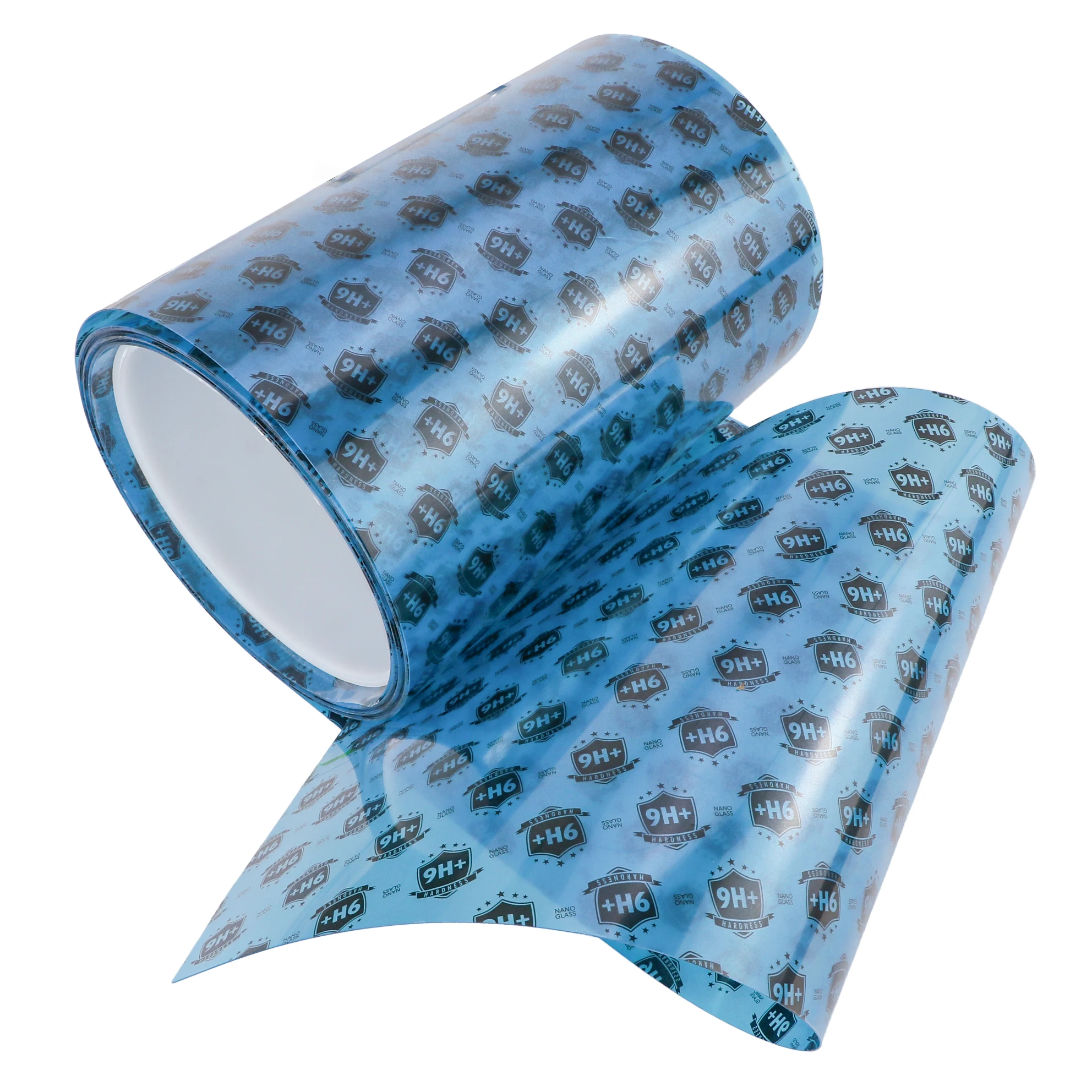
The performance profile of anti shock high clear PET film in demanding conditions depends on a complex interplay between polymer molecular structure, manufacturing process variables, and surface treatment technologies. Unlike standard protective films that prioritize either clarity or durability, these specialized materials achieve both through precise control of crystallinity, biaxial orientation, and functional coating integration. In harsh environments ranging from desert heat to arctic cold, from industrial chemical exposure to high-altitude UV bombardment, the film must preserve its protective function while maintaining the visual experience users expect from modern display technologies. Evaluating this performance requires examining specific environmental stressors individually and understanding how material properties respond to each challenge.
Thermal Performance Characteristics Under Temperature Extremes
High Temperature Resistance and Dimensional Stability
The thermal performance ceiling of anti shock high clear PET film directly determines its suitability for applications exposed to elevated temperatures. The polyethylene terephthalate polymer chain structure provides inherent heat resistance, with quality formulations maintaining structural integrity at temperatures reaching 150 to 180 degrees Celsius for short exposure periods. During continuous high-temperature exposure, such as devices left in vehicles during summer months or industrial equipment operating in heated environments, the film must resist thermal deformation, shrinkage, and optical distortion. The biaxial orientation process used in manufacturing premium anti shock high clear PET film creates a balanced molecular structure that distributes thermal stress evenly across both machine and transverse directions, minimizing the dimensional changes that compromise protective function and aesthetic appearance.
Heat-induced degradation manifests through several observable changes that signal performance limits. As temperatures approach the glass transition point of PET, typically around 70 to 80 degrees Celsius, the material begins exhibiting increased flexibility and reduced modulus. However, well-engineered anti shock high clear PET film incorporates heat stabilization additives that extend the usable temperature range by delaying polymer chain mobility and preventing premature softening. In automotive applications where dashboard temperatures can exceed 90 degrees Celsius, films with enhanced thermal stabilization maintain their protective shock absorption capacity and optical clarity, whereas inferior products develop surface waviness, adhesive failure, or permanent haze formation. The coefficient of thermal expansion becomes particularly critical in these scenarios, as mismatched expansion rates between the film and underlying display can generate interfacial stress leading to delamination or bubble formation.
Low Temperature Flexibility and Brittleness Resistance
Cold environment performance reveals another dimension of anti shock high clear PET film capabilities, particularly relevant for outdoor equipment, cold storage applications, and devices used in winter climates. Standard PET formulations become increasingly brittle as temperatures drop below freezing, with impact resistance declining sharply at subzero conditions. The molecular structure becomes less mobile, reducing the material's ability to absorb and dissipate impact energy through elastic deformation. Premium anti shock high clear PET film addresses this limitation through the incorporation of impact modifiers and plasticizing agents that maintain molecular chain flexibility even at temperatures down to negative 40 degrees Celsius. This cold-temperature ductility ensures that the film continues providing shock protection rather than becoming a rigid, crack-prone layer that could actually increase display vulnerability during impact events.
The relationship between temperature and shock absorption efficiency becomes especially important in applications experiencing rapid temperature cycling. Construction equipment displays, outdoor kiosks, and military devices often transition between extreme temperature ranges within hours. Anti shock high clear PET film must accommodate these thermal cycles without developing micro-cracks, permanent deformation, or adhesive bond degradation. The film's multilayer structure typically includes a core layer optimized for mechanical properties and surface layers engineered for environmental resistance. During cold exposure, the carefully balanced glass transition characteristics of these layers ensure that the shock-absorbing mechanism remains functional, allowing the material to flex and distribute impact forces rather than transmitting them directly to the underlying display. Testing protocols for cold performance include repeated impact testing at various subzero temperatures, revealing how effectively the film maintains its protective function across the operational temperature spectrum.
Thermal Cycling Durability and Long-Term Stability
Perhaps the most demanding thermal environment involves repeated cycling between temperature extremes, which accelerates material fatigue and can reveal latent performance weaknesses. Anti shock high clear PET film intended for outdoor or vehicular applications must withstand hundreds or thousands of thermal cycles spanning 60 to 80 degrees Celsius temperature differentials. Each cycle induces expansion and contraction stresses that challenge both the film's internal structure and its interfacial bonds with adhesives and display surfaces. High-performance formulations incorporate stabilization packages that resist thermal oxidation, prevent polymer chain scission, and maintain adhesive compatibility throughout extended temperature cycling exposure.
The optical clarity retention during thermal cycling provides a key performance indicator for anti shock high clear PET film quality. Inferior products develop progressive haze, yellowing, or surface texture changes as thermal stress accumulates over time. The hardcoat surface layer, typically applied to achieve scratch resistance and maintain clarity, must possess thermal expansion properties compatible with the underlying PET substrate to prevent crazing or delamination. Similarly, the shock-absorbing properties should not degrade substantially with thermal cycling exposure, as polymer chain alignment and crosslink density changes can reduce impact energy absorption capacity. Accelerated aging tests simulating years of real-world thermal exposure help validate that the film maintains both its protective shock resistance and its high clarity throughout the expected product lifecycle, ensuring reliable performance in harsh thermal environments.
Mechanical Stress Response and Impact Protection Mechanisms
Multi-Impact Performance and Energy Dissipation
The fundamental purpose of anti shock high clear PET film centers on its ability to protect displays from mechanical impact damage, making its performance under repeated stress events critical to its value proposition. Unlike single-impact scenarios where any protective layer might provide some benefit, harsh environments often subject devices to multiple impact events over time. The material's capacity to absorb and dissipate impact energy without permanent deformation or property degradation determines its practical effectiveness. The shock absorption mechanism relies on the film's viscoelastic properties, which allow it to deform elastically during impact while dissipating kinetic energy as heat through internal molecular friction. Premium anti shock high clear PET film achieves this through precise control of polymer molecular weight, crystallinity levels, and orientation balance.
When an impact occurs, the force propagates through the film structure as a stress wave. The film's thickness, typically ranging from 100 to 200 micrometers for shock protection applications, provides sufficient material depth for energy absorption while maintaining the flexibility needed for device assembly and the optical clarity required for display applications. The biaxially oriented structure ensures that impact forces are distributed across a wider area rather than concentrating stress at the point of contact. This distribution effect significantly reduces the peak stress transmitted to the underlying display glass or plastic, decreasing the likelihood of crack initiation or propagation. In harsh environments where devices experience frequent drops, vibration, or contact with hard objects, anti shock high clear PET film extends display lifespan by serving as a sacrificial protective layer that can be replaced at far lower cost than display module replacement.
Abrasion Resistance and Surface Durability
Harsh environments frequently involve abrasive conditions that test the surface durability of protective films. Industrial settings expose devices to dust, sand, metal particles, and contact with rough surfaces. Outdoor applications face windborne abrasive particles, while consumer devices endure keys, coins, and other pocket contents. Anti shock high clear PET film addresses these challenges through hardcoat surface treatments that increase scratch resistance to pencil hardness levels of 3H to 4H, with premium formulations reaching 9H through specialized coating technologies. These hardcoat layers consist of cross-linked polymer or ceramic-organic hybrid materials that provide a durable barrier against surface scratching while maintaining the flexibility needed to conform to curved display surfaces and withstand the flexing that occurs during impacts.
The relationship between surface hardness and shock absorption presents an engineering challenge, as increasing surface hardness typically reduces material flexibility. Effective anti shock high clear PET film resolves this through multilayer design where a hard, thin surface layer provides scratch resistance while underlying layers maintain the thickness and viscoelastic properties needed for impact energy absorption. The hardcoat must bond strongly to the PET substrate to prevent delamination during impact events or thermal stress. In harsh environments with both abrasive exposure and impact threats, this integrated approach ensures that the film provides comprehensive protection rather than excelling at one function while failing at another. Long-term abrasion testing using standardized methods like Taber abrasion or steel wool scratching quantifies how well the film maintains optical clarity and surface smoothness after exposure to realistic wear conditions.
Flexural Endurance and Fatigue Resistance
Modern devices increasingly incorporate flexible or curved displays, demanding that protective films accommodate repeated bending without cracking, delaminating, or losing protective properties. Anti shock high clear PET film designed for these applications must demonstrate exceptional flexural endurance, surviving tens or hundreds of thousands of bend cycles at specific radii. The polymer chain orientation and crystallinity balance become crucial factors, as excessive crystallinity increases modulus but reduces flexibility, while insufficient crystallinity compromises strength and dimensional stability. The optimal formulation achieves a balance where the material maintains structural integrity under tensile stress while possessing sufficient chain mobility to accommodate bending deformation.
In harsh environment applications where devices experience both mechanical flexing and environmental stressors simultaneously, the cumulative effect can accelerate material fatigue. A device exposed to temperature extremes while being repeatedly opened and closed, such as a ruggedized mobile computer used in field service applications, challenges both the thermal stability and mechanical durability of the protective film. Anti shock high clear PET film must maintain its shock absorption capacity even after extended flexural cycling, as fatigue-induced micro-damage could compromise impact protection precisely when it becomes most needed. Testing protocols evaluate not only the film's ability to survive flexural cycling without visible failure but also measure retention of mechanical properties like tensile strength, elongation, and impact resistance throughout the cycling process. This comprehensive approach ensures that the film provides reliable protection throughout the device's operational life, even under the most demanding use conditions.
Chemical Resistance and Environmental Exposure Stability
Solvent and Chemical Contact Performance
Harsh environments often include exposure to chemicals that can degrade inadequately protected materials. Industrial settings may involve cleaning solvents, oils, lubricants, or process chemicals. Consumer applications face cosmetics, lotions, hand sanitizers, and cleaning products. Anti shock high clear PET film must resist these chemical exposures without swelling, softening, crazing, or losing adhesion to the display surface. The inherent chemical resistance of PET polymer provides a foundation for this protection, as the aromatic polyester structure resists attack by many common solvents and chemicals. However, the complete film system including adhesives, hardcoats, and any functional coatings must all demonstrate compatible chemical resistance to ensure comprehensive protection.
Certain chemical classes pose particular challenges for protective films. Alcohol-based hand sanitizers, widely used in healthcare and public environments, can penetrate some coating systems and affect adhesive bonds if the film lacks proper chemical resistance engineering. Strong alkaline cleaners used in industrial cleaning applications can attack ester linkages in poorly stabilized PET, leading to surface degradation and haze formation. Premium anti shock high clear PET film incorporates chemical-resistant hardcoats and uses adhesive formulations specifically designed to resist chemical penetration and maintain bond strength after exposure. Testing protocols expose film samples to relevant chemical environments for extended periods, then evaluate optical properties, adhesive strength, and mechanical performance to verify that the material maintains its protective function despite chemical contact.
Humidity and Moisture Resistance
Moisture presents a pervasive environmental challenge across many harsh environment applications, from tropical climates to marine environments to indoor spaces with poor climate control. Anti shock high clear PET film must resist moisture-induced degradation including hydrolysis, adhesive failure, and dimensional changes. While PET itself exhibits relatively low moisture absorption compared to other polymers, typically around 0.1 to 0.3 percent, the film edges, adhesive interfaces, and any defects provide potential moisture ingress pathways. In high-humidity environments, moisture can accumulate at the film-display interface, creating optical interference patterns, reducing adhesive strength, or even promoting corrosion of display metallization layers.
The edge seal design becomes critical for moisture resistance in demanding applications. Anti shock high clear PET film intended for harsh environments often incorporates edge sealing techniques or adhesive formulations with moisture barrier properties that slow water vapor transmission to the interface. The adhesive itself must resist plasticization and strength loss when exposed to moisture, maintaining secure bonding even in saturated conditions. In marine applications or devices used in wet industrial processes, the film may experience direct water contact combined with other stressors like salt spray or temperature variation. These combined exposures test the durability of the entire protective system, revealing whether the shock absorption properties, optical clarity, and adhesive bonding remain stable despite moisture challenge. Accelerated aging tests conducted at elevated temperature and humidity conditions help predict long-term performance in moisture-rich harsh environments.
UV Radiation Resistance and Outdoor Weathering
Outdoor applications expose anti shock high clear PET film to ultraviolet radiation that can initiate photodegradation reactions leading to yellowing, embrittlement, and property loss. The aromatic rings in PET polymer structure absorb UV energy, potentially triggering chain scission reactions that reduce molecular weight and mechanical strength. Harsh outdoor environments combine UV exposure with temperature extremes, moisture, and often pollutant exposure, creating particularly challenging conditions. High-quality anti shock high clear PET film addresses UV vulnerability through the incorporation of UV absorbers and stabilizers that intercept harmful radiation before it can damage the polymer chains. These additives work by absorbing UV energy and dissipating it as harmless heat, or by quenching excited polymer states before they can undergo degradation reactions.
The hardcoat surface layer serves dual functions in UV protection, both shielding the underlying PET from direct UV exposure and maintaining surface clarity despite prolonged outdoor weathering. Ceramic-enhanced hardcoats provide superior UV blocking compared to purely organic coatings, extending the outdoor service life of the film. In applications like outdoor kiosks, agricultural equipment displays, or marine navigation systems, anti shock high clear PET film may experience years of continuous outdoor exposure. Accelerated weathering tests using xenon arc or UV fluorescent chambers simulate years of outdoor exposure in compressed timeframes, allowing verification that the film maintains its shock protection capabilities, optical clarity, and adhesive bonding despite the cumulative effects of UV radiation, temperature cycling, and moisture exposure that characterize harsh outdoor environments.
Optical Performance Maintenance in Degrading Conditions
Clarity Retention Under Environmental Stress
The descriptive term high clear in anti shock high clear PET film specifications emphasizes the critical importance of optical transparency in display protection applications. Initial clarity means little if the film develops haze, yellowing, or surface texture degradation after exposure to harsh environmental conditions. Optical performance depends on several material characteristics including refractive index uniformity, surface smoothness, internal defect absence, and stability of these properties under stress. Premium formulations achieve light transmission levels exceeding 92 percent across the visible spectrum, with minimal haze values below 1 percent. Maintaining these optical characteristics throughout environmental exposure requires careful material selection and stabilization.
Environmental stressors affect optical properties through various mechanisms. UV exposure can create color centers that absorb visible light, leading to yellowing. Thermal stress can induce micro-voiding or crystallinity changes that scatter light and increase haze. Chemical exposure can roughen surfaces or create interface irregularities that degrade optical performance. Moisture ingress can cause swelling or create refractive index gradients. Effective anti shock high clear PET film resists all these degradation pathways through comprehensive stabilization strategies. UV stabilizers prevent photochemical degradation, thermal stabilizers maintain molecular structure at elevated temperatures, and chemical-resistant surface treatments protect against environmental chemical attack. The result is sustained optical clarity that preserves display quality and user experience even after extended exposure to harsh conditions that would render unprotected or inferior films unusable.
Anti-Glare and Surface Treatment Durability
Some anti shock high clear PET film variants incorporate surface treatments that reduce glare and improve display visibility in bright ambient conditions, particularly valuable in outdoor harsh environment applications. These treatments typically involve controlled surface texturing that scatters incident light, reducing specular reflections that impair visibility. The challenge lies in achieving effective glare reduction without excessive transmission loss or clarity degradation, while ensuring the surface treatment remains effective despite environmental exposure. The surface texture must resist abrasion from environmental particles, maintain its optical characteristics despite UV exposure and thermal cycling, and avoid collecting dirt or contaminants that could further impair visibility.
In harsh environments where devices operate in direct sunlight or high ambient lighting, the durability of anti-glare treatments becomes crucial to long-term usability. Anti shock high clear PET film designed for these applications uses durable surface texturing methods or coating technologies that provide stable anti-glare performance. The surface treatment must integrate with the hardcoat layer to ensure that both glare reduction and scratch resistance persist throughout the product lifecycle. Testing protocols evaluate not only initial anti-glare effectiveness but also retention of this property after accelerated weathering, abrasion exposure, and chemical contact. The ability to maintain high clarity while providing glare control and shock protection represents a significant engineering achievement, particularly when these properties must persist in harsh environmental conditions.
Touch Sensitivity and Response Accuracy
Modern displays predominantly use capacitive touch sensing, requiring that protective films maintain excellent electrical transparency to touch signals. Anti shock high clear PET film must not significantly attenuate the electric field coupling between the user's finger and the display's touch sensor, ensuring that touch response remains accurate and sensitive despite the protective layer. The dielectric properties of PET make it suitable for this application, as it does not excessively shield or distort the capacitive sensing field. However, some functional coatings or excessively thick films can degrade touch performance, creating a tension between impact protection goals and touch functionality requirements.
In harsh environments where users may operate devices while wearing gloves or with wet fingers, touch sensitivity becomes even more critical. Anti shock high clear PET film designed for industrial or outdoor applications often optimizes dielectric properties to maintain usability under these challenging conditions. The film thickness, surface conductivity characteristics, and overall electrical transparency must be carefully balanced to preserve touch functionality while providing adequate shock protection. Environmental stressors like moisture absorption, surface contamination, or coating degradation can potentially alter these electrical properties over time. Comprehensive testing ensures that anti shock high clear PET film maintains consistent touch response accuracy throughout environmental exposure, preventing the frustrating user experience of degraded touch performance that might otherwise develop in harsh environment applications.
Application-Specific Performance in Industry Environments
Industrial Equipment and Manufacturing Floor Conditions
Manufacturing environments present particularly demanding conditions combining mechanical hazards, chemical exposure, temperature variation, and contamination challenges. Control panels, machine interfaces, and mobile devices used on manufacturing floors face impact from tools, exposure to cutting fluids and cleaning chemicals, temperature extremes from nearby equipment, and airborne particulates. Anti shock high clear PET film used in these applications must provide comprehensive protection while maintaining the display visibility and touch responsiveness that operators require for safe and efficient equipment control. The film becomes a critical component in maintaining operational continuity, as display failures can halt production and create safety hazards.
The specific performance requirements vary across manufacturing sectors. Metal fabrication environments involve heavy impact risks and metallic particle contamination that could scratch unprotected surfaces. Chemical processing facilities require resistance to aggressive chemicals and solvents. Food processing operations demand compatibility with sanitizing chemicals and frequent cleaning protocols. Electronics assembly environments require static dissipation properties to prevent ESD damage. Premium anti shock high clear PET film can be engineered with application-specific properties addressing these varied requirements while maintaining the core functions of impact protection and optical clarity. The ability to withstand harsh industrial conditions while preserving functionality distinguishes effective protective solutions from commodity films that fail prematurely under operational stress.
Automotive and Transportation Application Performance
Automotive environments combine extreme temperature ranges, intense UV exposure, vibration, and occasional impact events creating a comprehensive harsh environment challenge. Display screens in vehicles face dashboard temperatures exceeding 90 degrees Celsius in summer, potential subzero exposure in winter climates, constant vibration from vehicle operation, UV radiation through windshields, and impact risks from objects in the vehicle. Anti shock high clear PET film protecting these displays must maintain all protective and optical functions throughout the vehicle's operational life, typically expected to span a decade or more. Automotive-grade films undergo extensive validation testing that simulates years of environmental exposure and operational stress.
The evolution toward larger, more complex vehicle displays increases the value of effective protection. Modern vehicles feature multiple displays including instrument clusters, center console infotainment systems, and rear-seat entertainment screens. The cost of display replacement creates strong economic incentives for effective protection, while the safety implications of display failures in critical vehicle systems drive performance requirements. Anti shock high clear PET film designed for automotive applications incorporates enhanced thermal stability, UV resistance, and adhesive formulations that maintain bonding despite the thermal cycling and vibration exposure characteristic of vehicle environments. The film must also meet automotive industry flammability and outgassing requirements, ensuring it does not contribute to safety hazards or create visibility-impairing windshield fogging. These stringent requirements make automotive applications an excellent validation of protective film performance in harsh environments.
Outdoor and Field Service Device Protection
Field service applications push mobile devices into some of the harshest environments encountered in commercial operations. Construction sites, utility maintenance, agriculture, mining, and outdoor recreation all subject devices to environmental extremes rarely encountered in consumer applications. Devices experience rain, snow, dust, mud, extreme temperatures, intense sunlight, and frequent drops or impacts. Anti shock high clear PET film protecting field service devices must provide military-grade durability while maintaining the display quality and touch responsiveness that users require for productivity. The film becomes an essential component of ruggedized device design, working in concert with reinforced housings and sealed ports to create comprehensive environmental protection.
Field service users often operate devices while wearing gloves, in bright sunlight, or with wet or dirty hands. Anti shock high clear PET film for these applications may incorporate enhanced touch sensitivity, anti-glare surface treatments, and oleophobic coatings that resist fingerprints and facilitate cleaning. The film must maintain these functional properties despite continuous outdoor exposure, frequent handling, and exposure to dirt, vegetation, chemicals, or other environmental contaminants encountered in field operations. Device replacement or repair in field service scenarios often involves significant downtime and logistical challenges, making preventive protection through high-performance films particularly valuable. The ability of anti shock high clear PET film to withstand and maintain protection in these extreme outdoor harsh environments demonstrates the material engineering sophistication achieved in modern protective film technologies.
FAQ
What temperature range can anti shock high clear PET film withstand without performance degradation?
High-quality anti shock high clear PET film typically maintains full performance across a temperature range from negative 40 degrees Celsius to positive 150 degrees Celsius for continuous exposure. Short-term excursions to 180 degrees Celsius are generally tolerated without permanent damage. Below negative 40 degrees Celsius, the material may become brittle and lose some shock absorption capacity, though it typically does not crack or fail catastrophically. Above 150 degrees Celsius for extended periods, dimensional stability decreases and optical clarity may degrade. The specific temperature limits depend on the particular formulation and stabilizer package used, with premium films engineered for harsh environments offering superior performance at both temperature extremes. For applications with known temperature exposure profiles, manufacturers can optimize material selection to ensure reliable performance throughout the expected range.
How does moisture and humidity affect the shock protection capabilities of the film?
Anti shock high clear PET film exhibits relatively low moisture absorption, typically below 0.3 percent by weight, which minimally affects its mechanical shock protection properties. However, moisture can influence the adhesive bond strength and potentially create interface issues if water accumulates between the film and display surface. High-quality films use moisture-resistant adhesive formulations that maintain bonding strength even in high-humidity environments. The shock absorption mechanism relies primarily on the viscoelastic properties of the PET polymer itself, which remain stable across normal humidity ranges. In extreme cases where water directly contacts the film surface, such as in marine applications or during device washing, proper edge sealing becomes important to prevent moisture ingress at the interface. Overall, properly engineered anti shock high clear PET film maintains its protective function effectively even in humid harsh environments when designed with appropriate moisture management features.
Does UV exposure reduce the impact protection effectiveness over time in outdoor applications?
UV exposure can potentially degrade anti shock high clear PET film over extended periods if the material lacks proper stabilization. UV radiation initiates photochemical reactions that can break polymer chains, reducing molecular weight and compromising mechanical properties including impact strength and flexibility. However, quality films designed for harsh outdoor environments incorporate UV stabilizers and absorbers that prevent this degradation. These additives intercept UV radiation before it damages the polymer structure, maintaining mechanical properties even after years of outdoor exposure. Testing data from accelerated weathering studies show that properly stabilized films retain over 90 percent of their original impact protection capabilities after weathering exposure equivalent to several years of outdoor service. The hardcoat surface layer provides additional UV shielding, protecting the underlying PET from direct radiation exposure. For outdoor harsh environment applications, selecting anti shock high clear PET film specifically formulated with UV stabilization ensures long-term protection effectiveness.
Can the film maintain clarity and shock protection in environments with chemical exposure?
Anti shock high clear PET film demonstrates good resistance to many common chemicals encountered in harsh environments, including weak acids, weak bases, alcohols, oils, and most cleaning solutions. The polyester structure of PET provides inherent chemical resistance, while hardcoat surface treatments add further protection. However, strong acids, strong bases, and certain organic solvents can potentially attack the film if exposure is prolonged or involves elevated temperatures. Quality films designed for chemically harsh environments use enhanced coating systems and adhesives specifically selected for chemical resistance. Brief contact with most chemicals, such as occurs during routine cleaning or incidental exposure, typically does not affect either the optical clarity or shock protection function. For applications with known specific chemical exposure risks, compatibility testing should verify that the selected anti shock high clear PET film formulation provides adequate resistance. Overall, the material's chemical resistance contributes to its suitability for harsh industrial and outdoor environments where chemical contact may occur alongside mechanical and environmental stressors.
Table of Contents
- Thermal Performance Characteristics Under Temperature Extremes
- Mechanical Stress Response and Impact Protection Mechanisms
- Chemical Resistance and Environmental Exposure Stability
- Optical Performance Maintenance in Degrading Conditions
- Application-Specific Performance in Industry Environments
-
FAQ
- What temperature range can anti shock high clear PET film withstand without performance degradation?
- How does moisture and humidity affect the shock protection capabilities of the film?
- Does UV exposure reduce the impact protection effectiveness over time in outdoor applications?
- Can the film maintain clarity and shock protection in environments with chemical exposure?

